Cerro San Cristóbal
A new story of light for an ancient place
Almería, Spain
Location
Almería, Spain
Lighting Design
DCI Lighting Design
Architecture Studio
Jesús María Basterra Pinilla
Photography
Martín García Pérez
Properties
Ayuntamiento de Almería
Year
2025
Cerro San Cristóbal
Cerro San Cristóbal
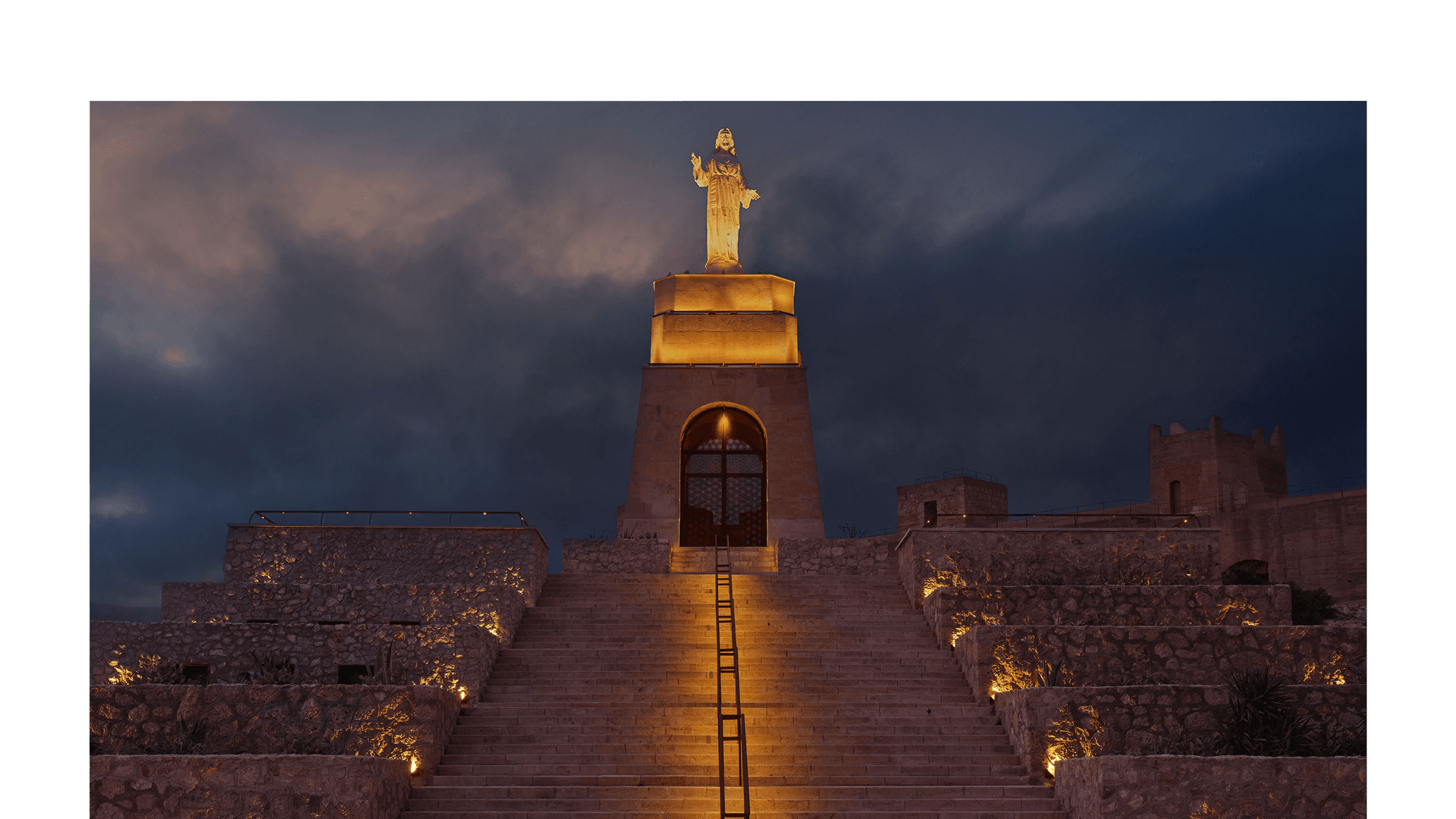
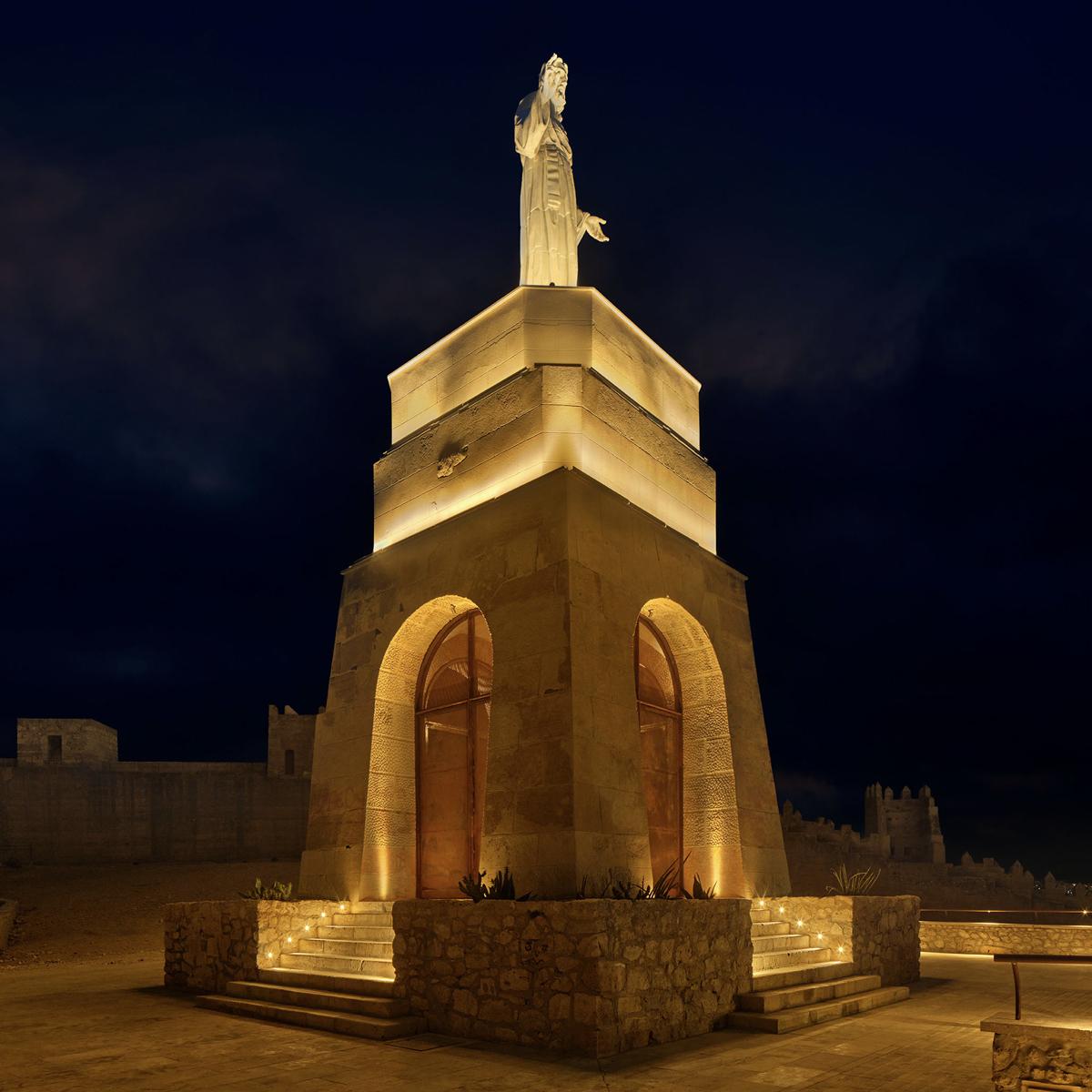
Natural panoramic viewpoint and historical-urban hub of the city of Almería, Cerro San Cristóbal stands as the silent guardian of collective memory. Located near the Alcazaba, one of the most significant Andalusian fortifications on the Iberian Peninsula, this promontory is now at the heart of a major urban and landscape enhancement project.
Urban and Landscape Regeneration
Silent Guardian of Collective Memory
The project blends into a culturally and scenically rich site, respecting its historical, architectural, and natural constraints while enhancing its identity and heritage.
Sensitivity to the theme of light
An extremely controlled approach
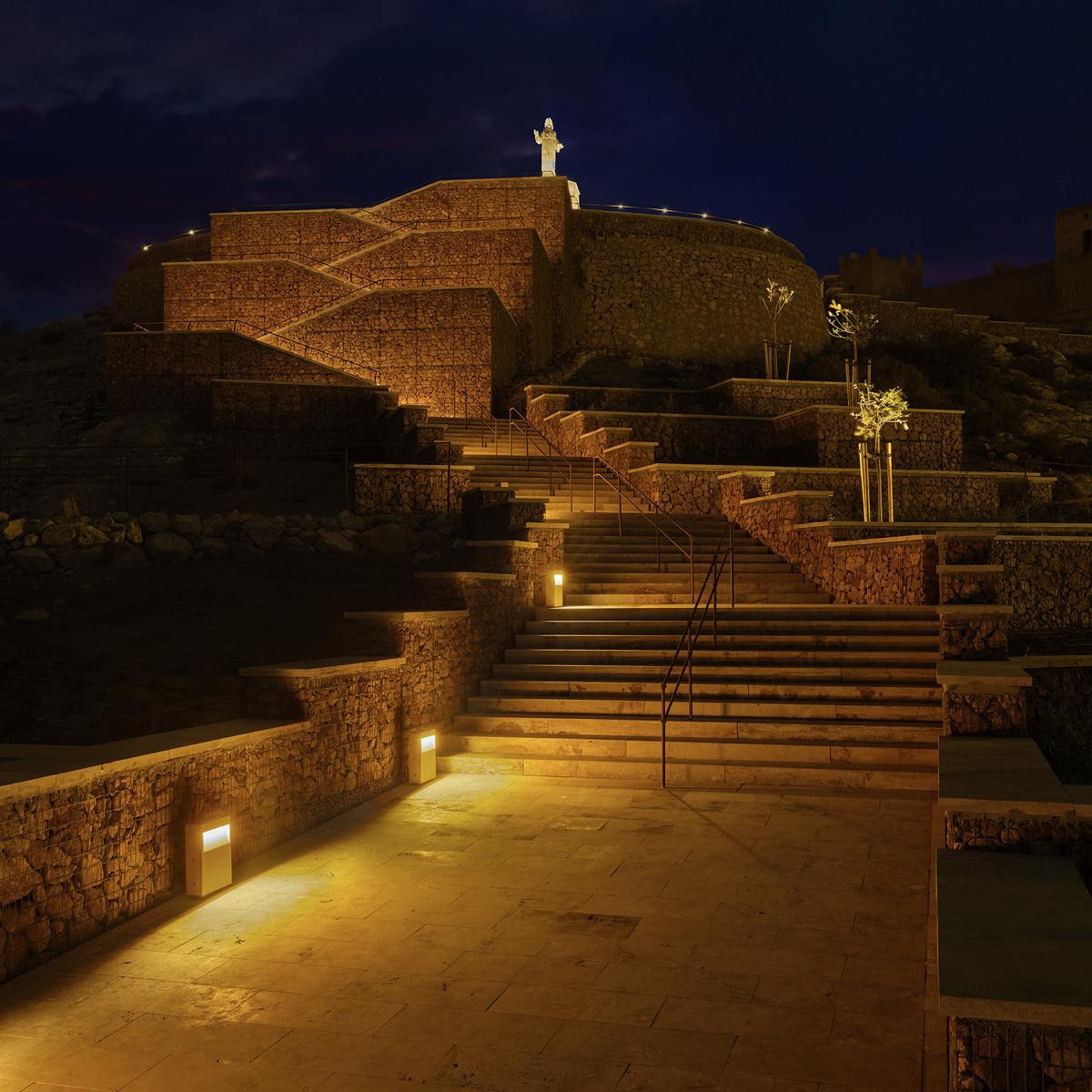
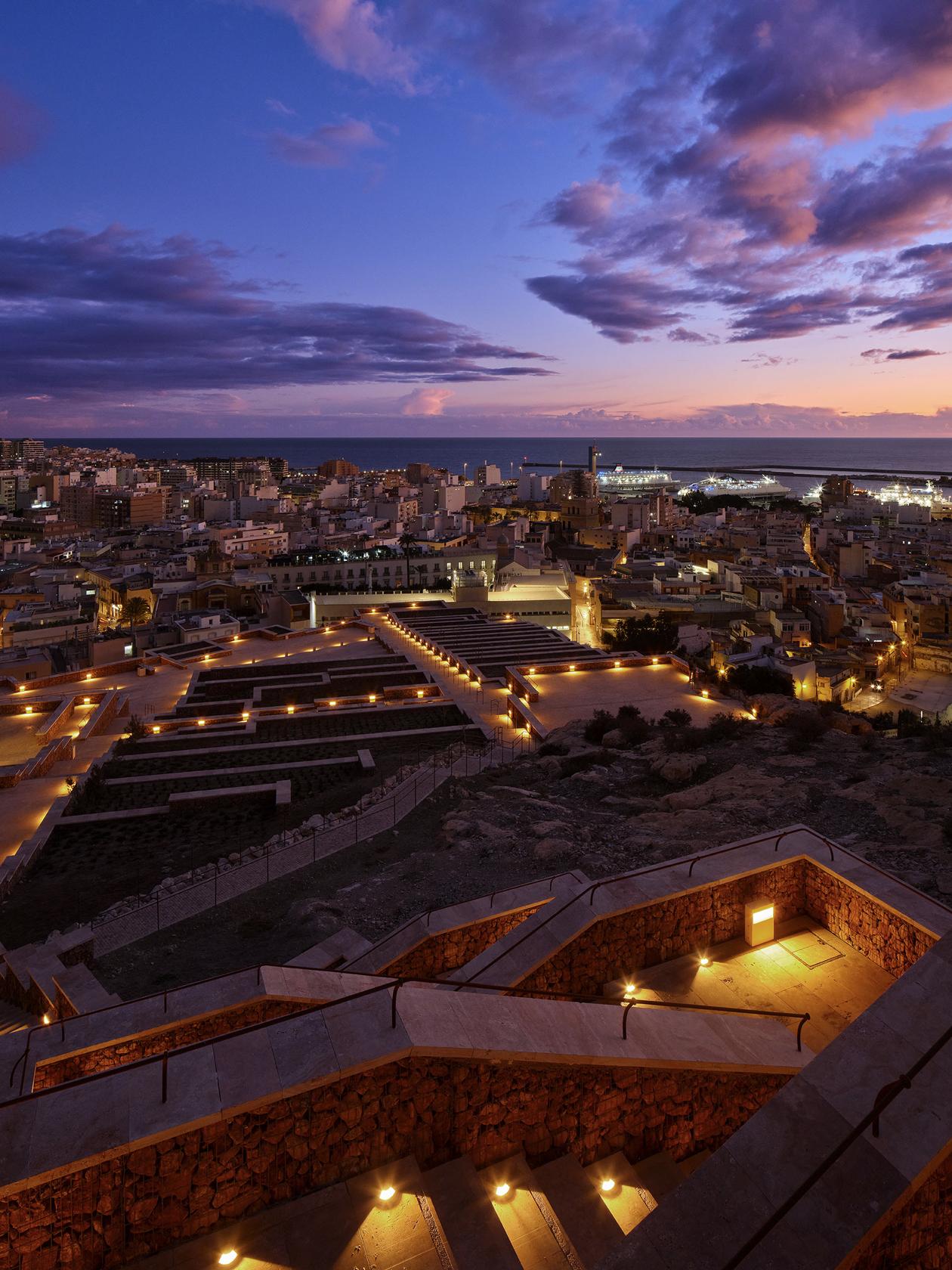
The intervention unfolds along paths connecting key historical elements and defensive architectures, giving back to the community a space for gathering, contemplation, and remembrance.
A distinctive feature of the intervention is the sensitivity with which the theme of light was addressed. Located within the area influenced by the Calar Alto Astronomical Observatory, the project required an extremely controlled approach, both technically and environmentally.
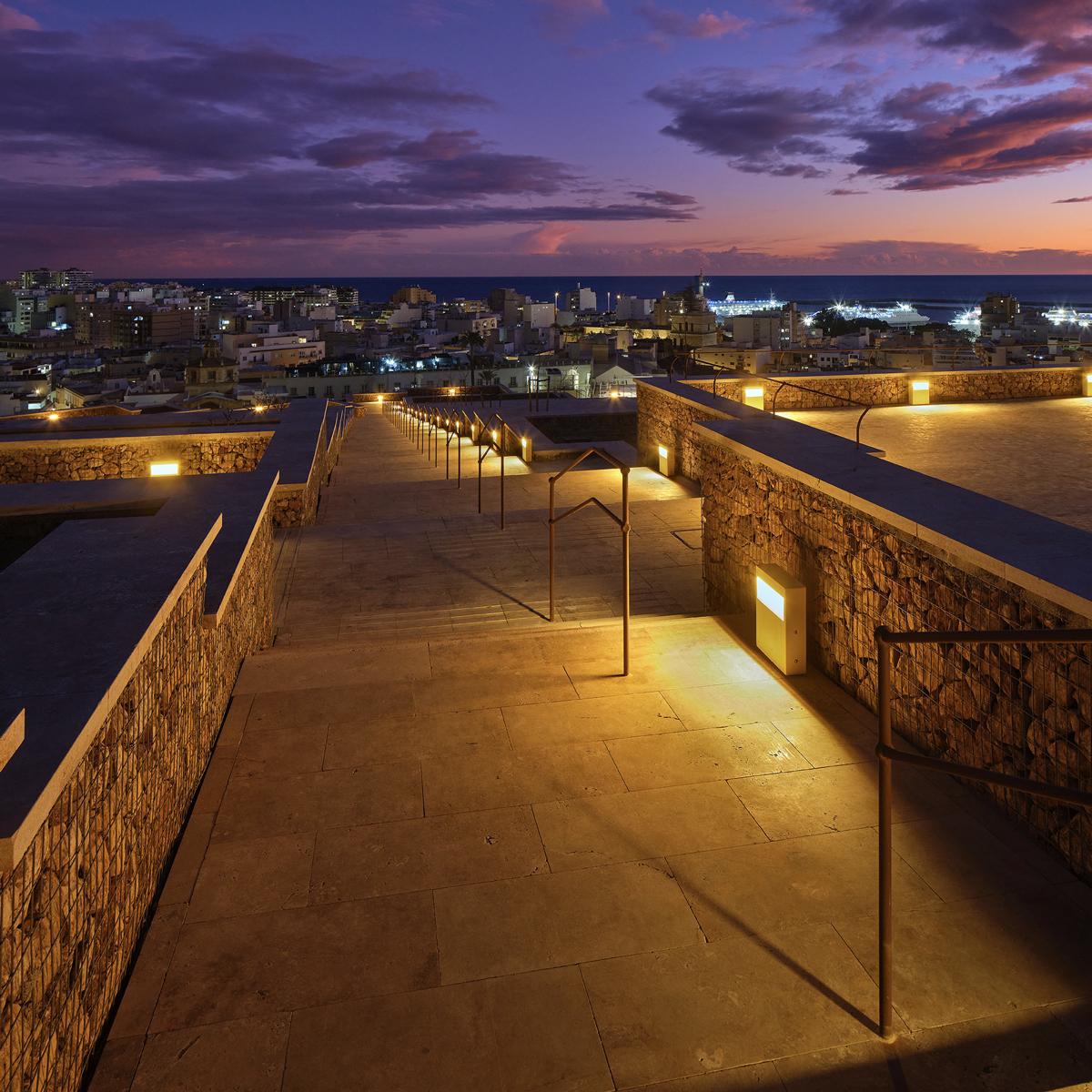
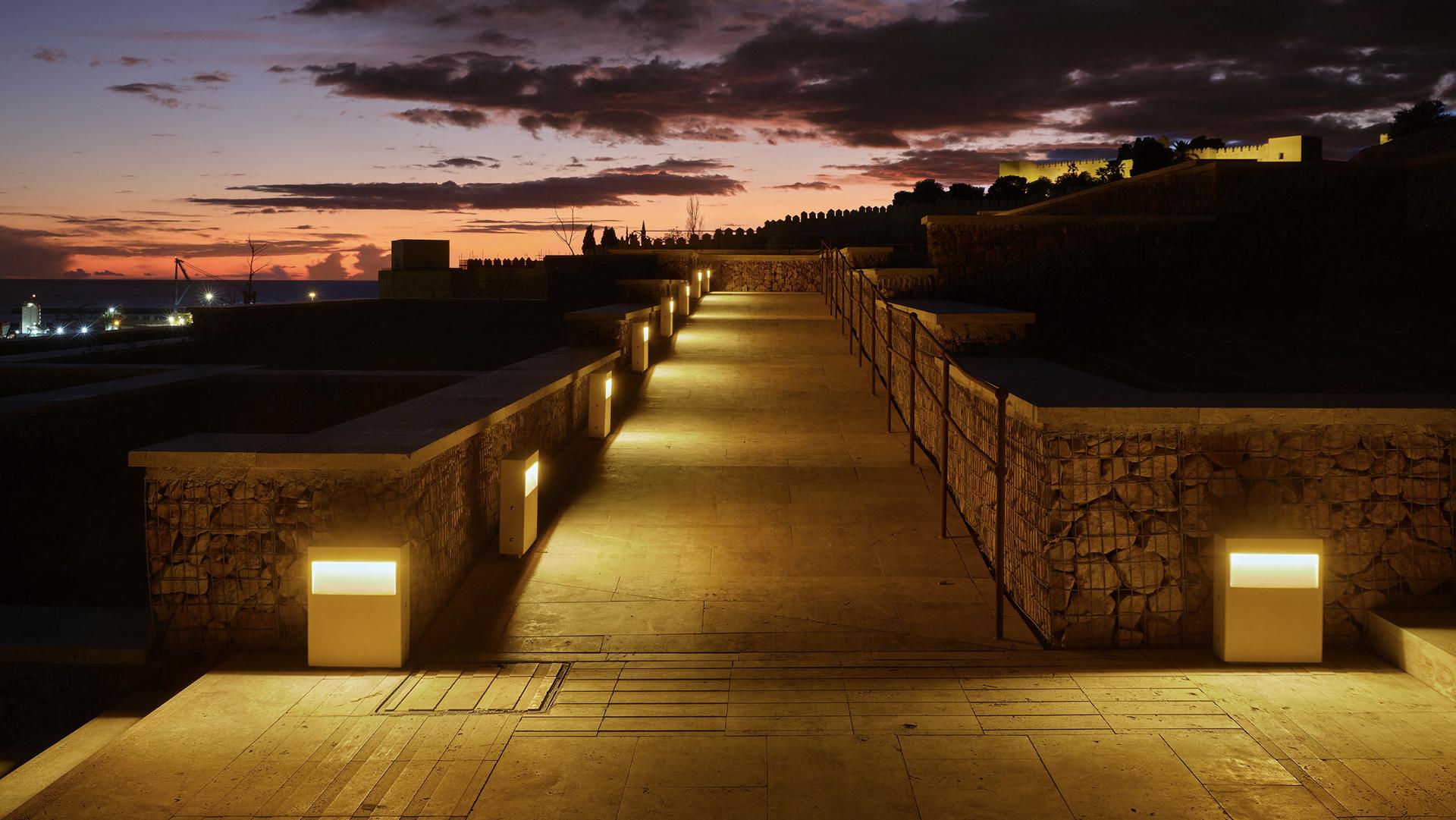
The result is a discreet lighting system with warm color temperatures, designed to guide visitors without disturbing the nocturnal ecosystem or the starry sky.
Lighting in Harmony with the Natural Environment
In outdoor lighting design, the choice of color temperature is a crucial element in preserving the balance between artificial light and the natural environment. A 2200K color temperature was selected to ensure a warm, soft light that blends harmoniously into the nighttime setting without altering the perception of the landscape. This amber hue reduces the visual and biological impact of lighting, limiting interference with animal behavior and minimizing light pollution—aligning with the needs of natural and protected areas.
Respect for biodiversity and environmental conditions is therefore at the core of the lighting strategy, which aims to support a more natural nighttime perception and to reduce disruption of circadian rhythms.
Additionally, the project employs luminaires designed to offer high visual comfort and low glare. Light is directed precisely and uniformly, avoiding spill and glare phenomena. The quality of the optical units, specifically designed for outdoor settings, allows for control over unwanted illumination and preserves the observer’s visual experience, ensuring effective yet discreet light distribution.
A Project That Interprets, Guides, Reveals
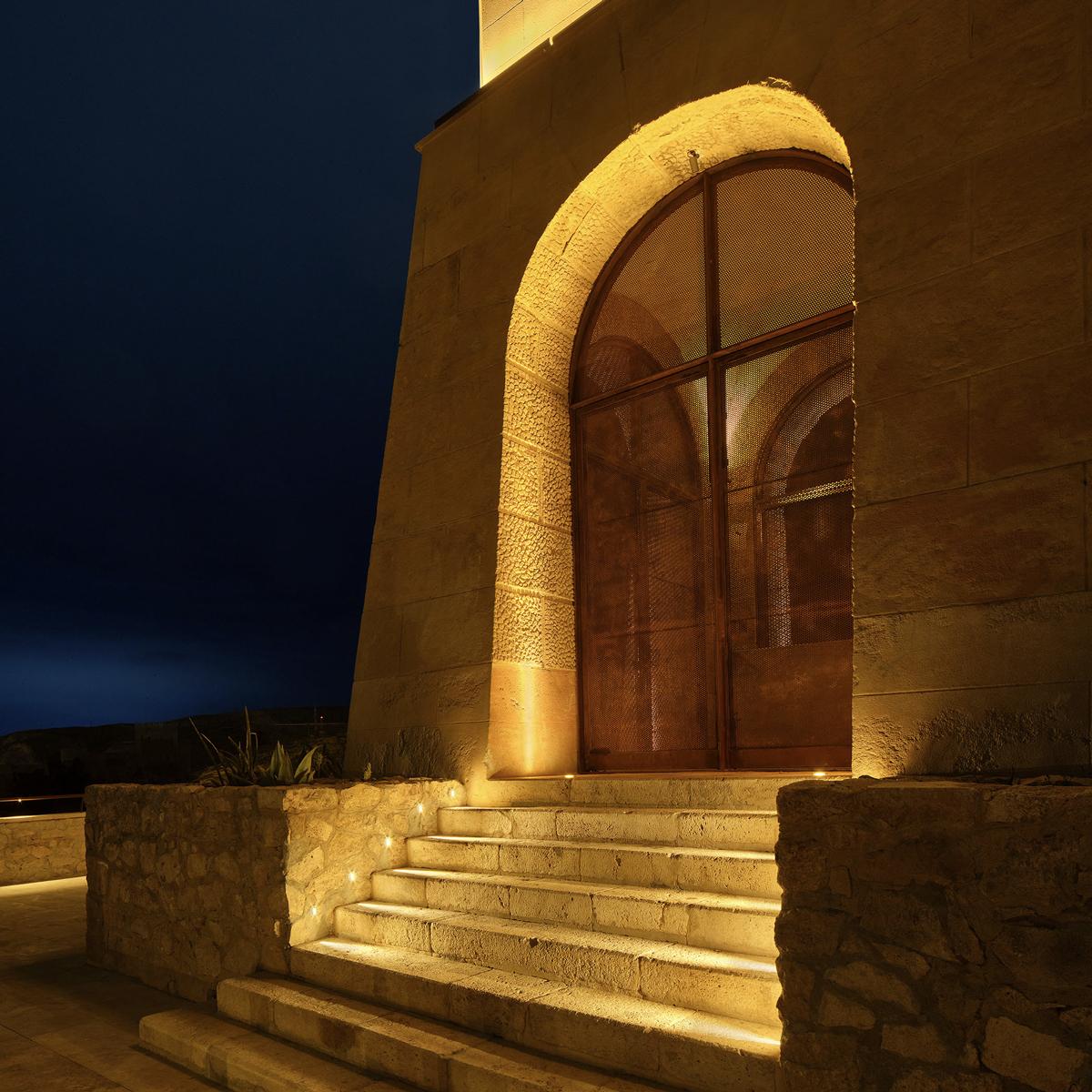
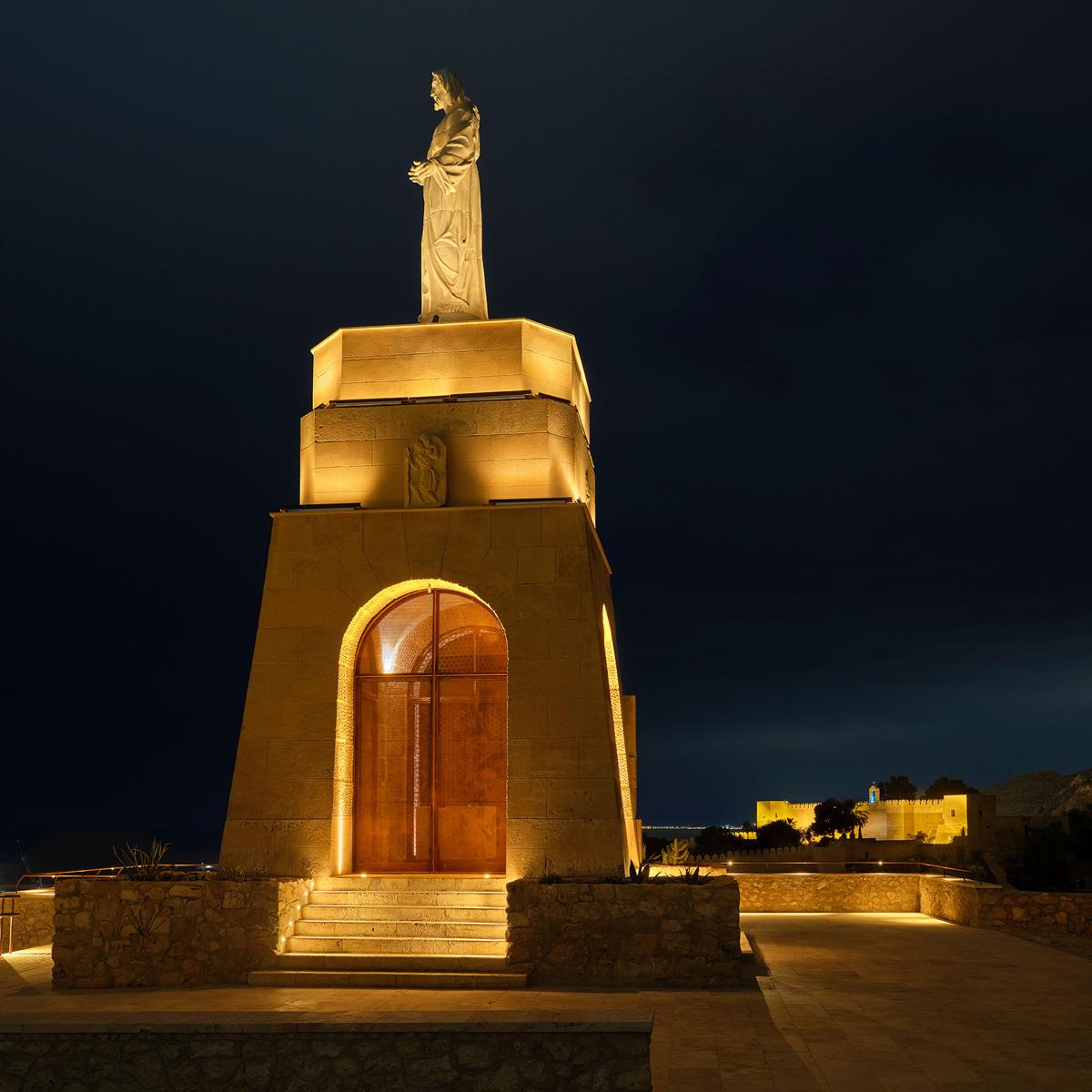
At the base of the Cerro San Cristóbal statue, i-LèD’s Archiline Wall linear fixtures sculpt the surface with a precise wall-washing effect. Made of anodized aluminum and extra-clear tempered glass, they combine mechanical durability with optical quality, thanks to adjustable anti-glare systems and high-performance optics.
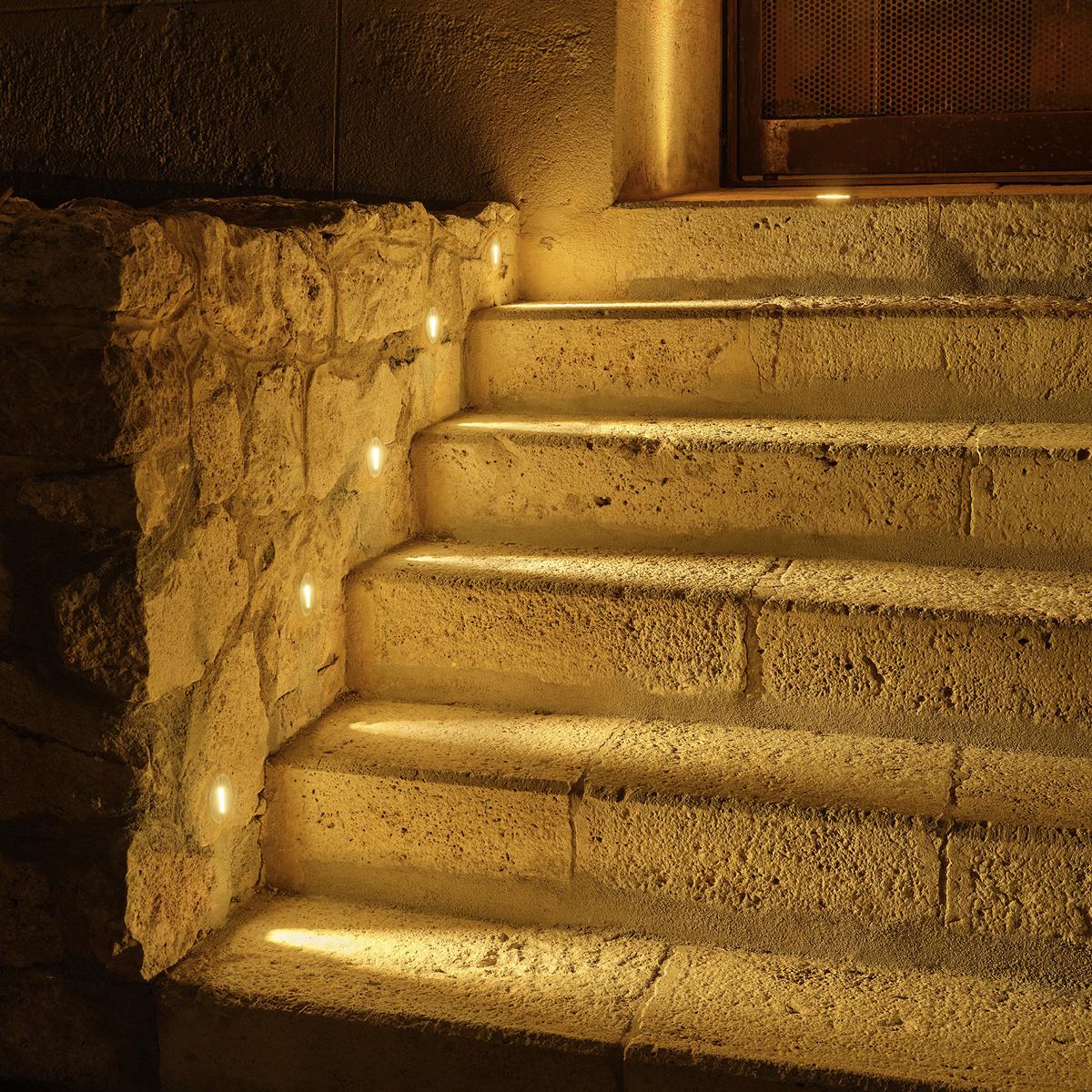
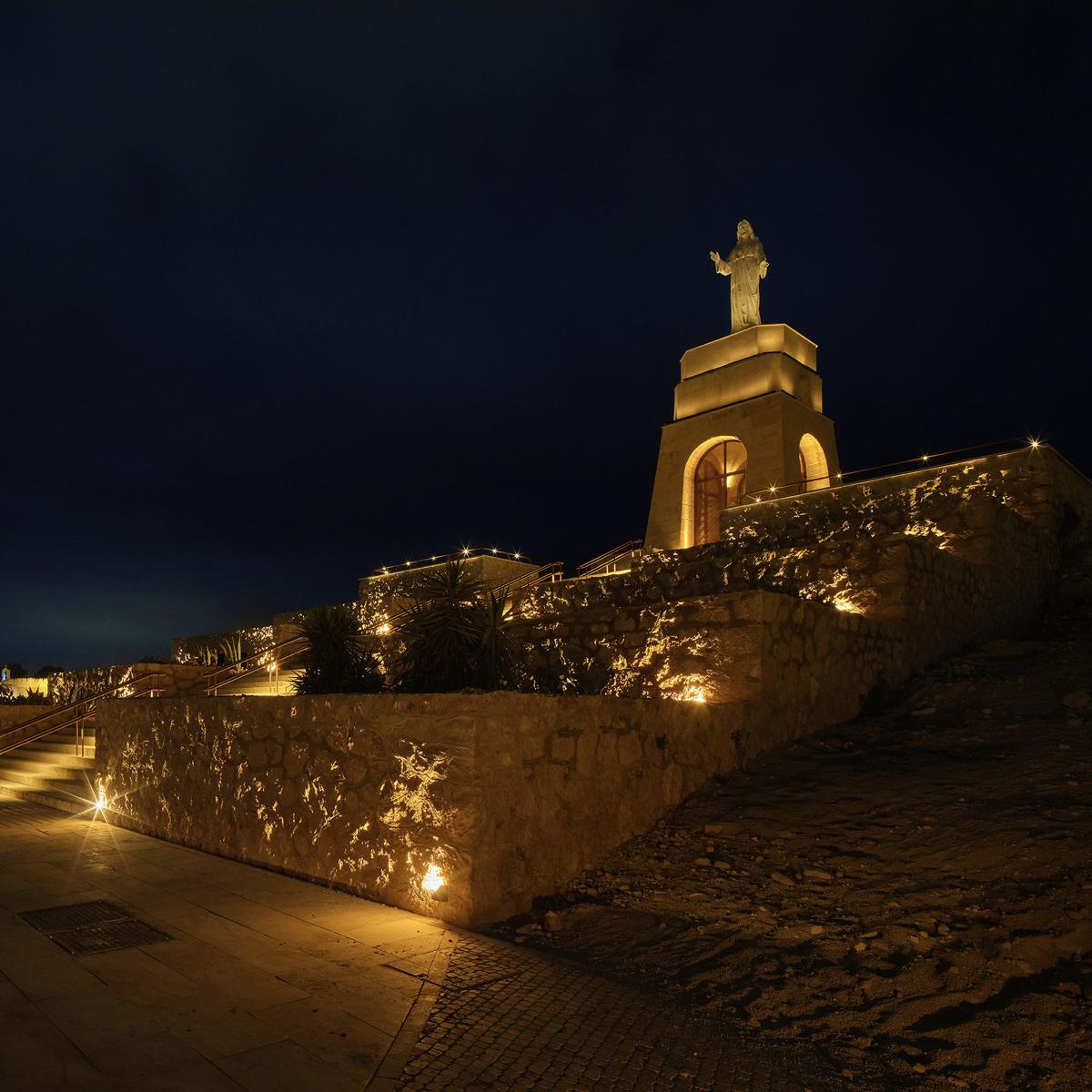
Along the steps, recessed Cut Round fixtures in the walls trace the path with well-calibrated points of light, while Myia projectors emit a fan-shaped grazing light that enhances the texture of the stones, generating dynamic chiaroscuro effects. On the ground, Orma Blade recessed lights use a special blade optic to cut precisely across the interior of the arches, enhancing depth and highlighting the geometry of the architectural element.
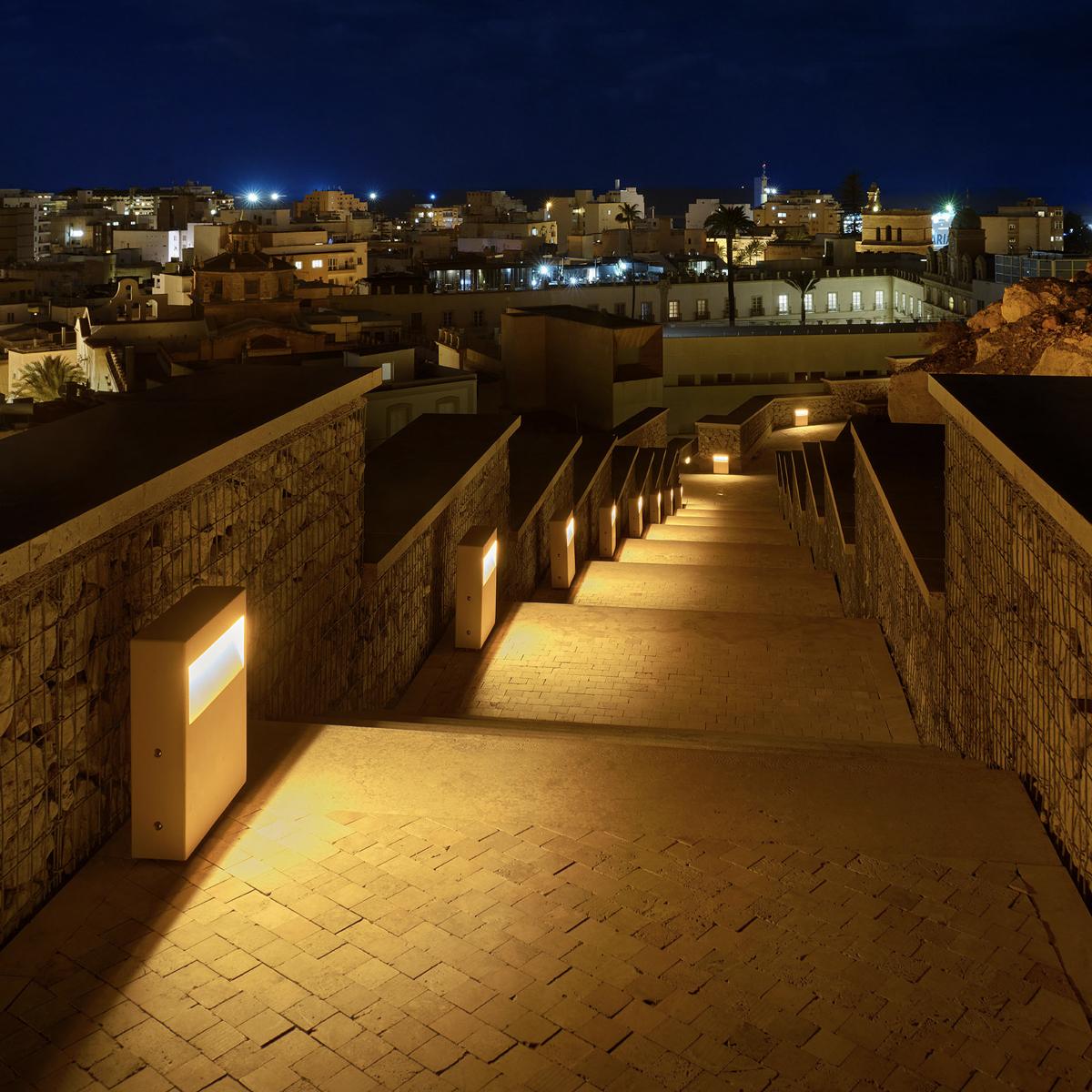
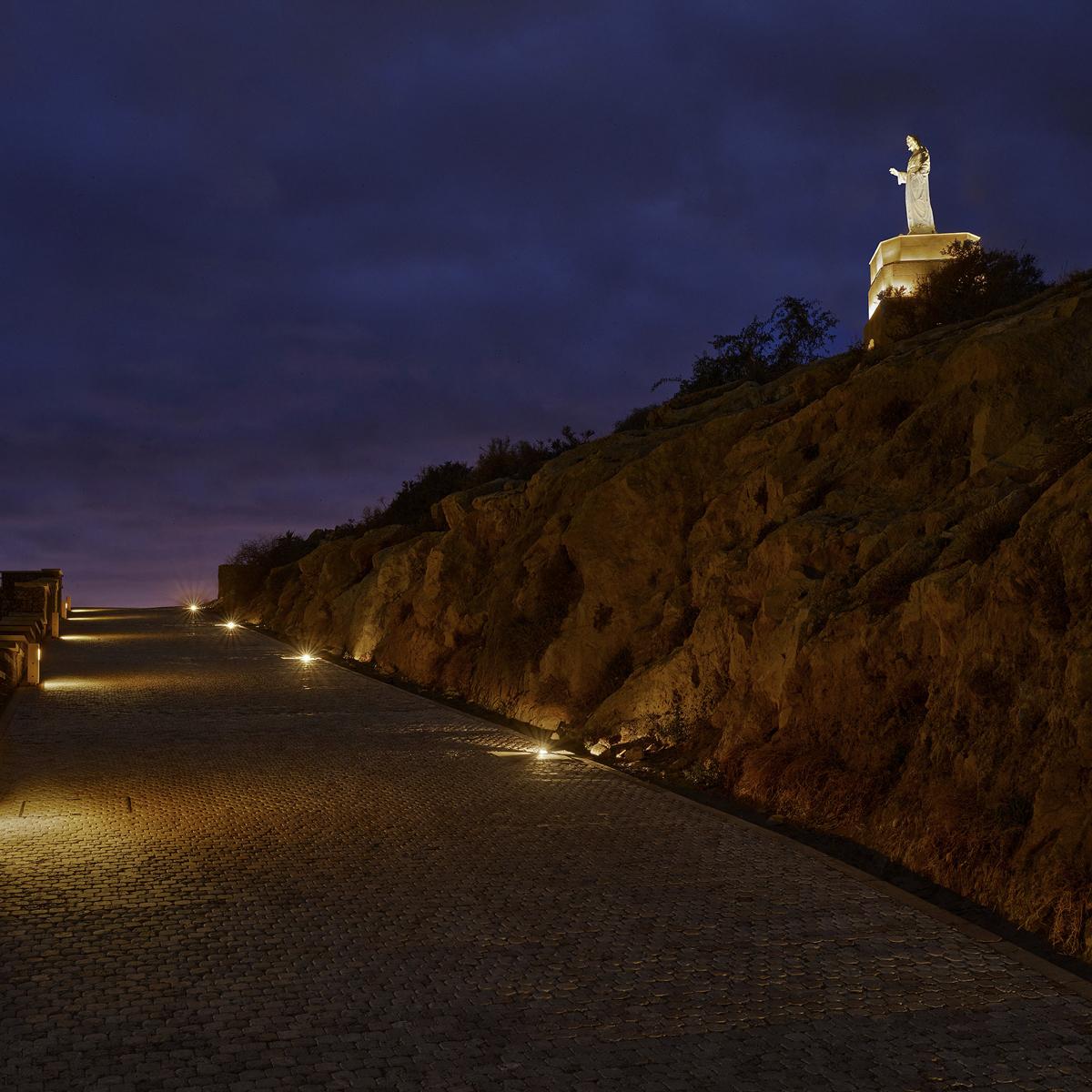
Alcor fixtures contribute a soft, diffused floor-grazing effect that guides the eye along the pathways. Completing the installation are custom-made concrete bollards, incorporating the lighting performance of Cem_WF fixtures, which guide walkways with functional light perfectly integrated into the landscape. All fixtures adopt a 2200K color temperature, chosen to minimize impact on the nocturnal environment and ensure compatibility with the protected area of the Calar Alto Astronomical Observatory.